Cells taken from your own thigh muscles ? Adipose tissue ? Bone marrow ? No, this isn’t a joke, researchers have been seriously considering stem cell treatment of Stress Urinary Incontinence (SUI) for the past decade. Although, it has some benefits but its cons. overweigh the pros. Let’s talk about this in more detail.
SUI is the involuntary passage of urine in small accounts associated with an activity that increases intra-abdominal pressure and thus the pressure on the bladder (eg. coughing, laughing, sneezing, exercising …etc). It is seen in 4% to 35% of adult women which is a high prevalence rate.
The ultimate goal for scientists (as always), was to achieve a permanent cure for SUI by restoration of the intrinsic and extrinsic urethral sphincter and the surrounding connective tissue, including peripheral nerves and blood vessels.
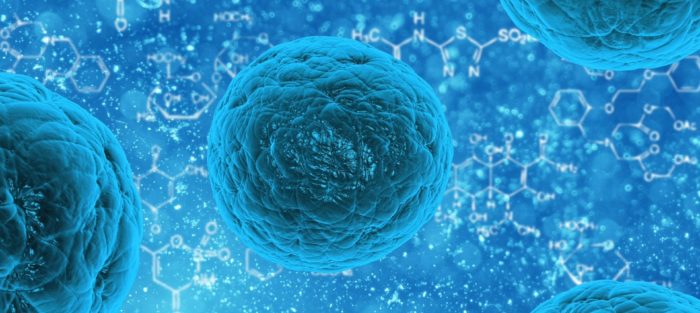
Stem cells are the current basis for tissue engineering and regenerative medicine. Stem cells derived from skeletal muscle, adipose tissue, bone marrow and urine have been used in researches for the treatment of SUI. Thus, they are divided into categories and these are: Muscle Derived Stem Cells (MDSCs), Adipose Derived Stem Cells (ADSCs), Bone Marrow Derived Stem Cells (BMDSCs) and Urine Derived Stem Cells (UDSCs). Let’s discuss the pros/cons of each one of them.
MDSCs can be obtained in large quantities under local anesthesia. They are first isolated from autologous skeletal muscles (thighs) and then expanded in vitro and injected into the urethral sphincter. Previous studies have shown that although these cells successfully integrated in the urethral tissue and partially restored sphincter function (in the short term), they had a relatively poor proliferation potential; thus, repeated cell injections were required. In addition to that, MDSCs often differentiate quickly without stimulation before being implanted which is a huge drawback.
Moving on to ADSCs, these are the most used cells in autoplastic transplantation. They can be easily obtained and in large quantities from adipose tissues thus making repeated injections more acceptable. Unlike MDSCs, these cells proliferate rapidly even in low serum medium. Studies have shown that they have a huge potential to become the futuristic treatment of SUI, as they restored both the structure and function of the urethral sphincter in the long term. However, reduced and abnormal voiding (of urine) rates were noted (33.3% versus 80%).
BMDSCs are adherent by nature which makes them easy to grow and expand in culture. They are relatively easy to obtain at enough density for therapy. Data from several studies showed that injected BMDSCs have the capacity to induce urethral sphincter regeneration under special conditions. They can differentiate into muscular cells and restore resistance of urination. In one of the studies, a periurethral injection of BMDSCs restored the damaged external urethral sphincter and significantly improved valsalva (or abodminal) leak point pressure (VLPP). These cells survived and differentiated into both skeletal and smooth muscle cells and peripheral nerve cells. Nevertheless, the extraction of autologous bone marrow extraction is painful (similar to MDSCs) making the patient at risk of complications.
Finally, we have URSCs. These cells can be easily and repeatedly obtained from urine samples at any patient age which is a huge advantage. Very few studies were carried on these cells, but they do pose some potential of restoring continence when injected with collagen-I gel, as notable regeneration of muscle tissue was noted.
In the end, stem cells have a huge potential in the treatment of any disease and SUI is one of them. Each has his own advantages and drawbacks and further studies are needed before being used as a treatment of SUI.
Read More